Small Business Grants vs Commercial Loans: Which Is Better for Growth?
Small Business Grants vs Commercial Loans: Which Is Better for Growth?

Growing a business usually requires money before it produces more money.
You might need a lot of new equipment to increase production, additional staff to service new customers, funding to commercialise a product, or capital to expand into another market. Whatever the opportunity, one question quickly comes up:
where should the funding come from?
For Australian businesses, two common options are small business grants and commercial loans. Both can provide the capital needed to move a project forward, but they work in very different ways.
A grant can reduce the amount of capital a business needs to contribute to an eligible project, while a commercial loan can offer greater flexibility and potentially faster access to funds. The right choice depends on your project, financial position, timing and long-term growth strategy.
Understanding business grants vs loans can therefore help you make a more informed funding decision.
What are Small Business Grants?
Small business grants are funding programs designed to support projects, industries or economic outcomes.
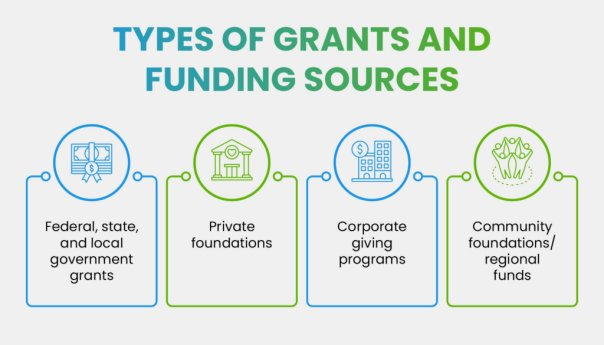
In Australia, funding opportunities may be offered by Commonwealth, state, territory and local governments. Some programs support specific industries, while others focus on objectives such as innovation, manufacturing, sustainability, regional development, commercialisation, exports or workforce capability.
Unlike a conventional commercial loan, grant funding generally does not need to be repaid, provided the recipient complies with the conditions of the funding agreement.
That makes grants attractive, but there is an important distinction: government funding is not simply free money for businesses.
Grant programs normally have clearly defined objectives and eligibility criteria. Your business and project must fit those requirements, and competitive programs can require a detailed application explaining why your project deserves support.
Many programs also require businesses to contribute some of the project costs themselves. Depending on the grant, applicants may need to demonstrate financial capacity, project readiness and their ability to successfully deliver the proposed outcomes.
What Is a Commercial Business Loan?
A commercial loan is money borrowed from a bank, lender or other finance provider for business purposes.
Depending on the lender and finance product, businesses may use borrowed funds for equipment, property, inventory, working capital, expansion or other commercial activities.
Unlike grants, loans must be repaid, generally with interest and fees.
The lender will usually assess factors such as the business's financial performance, cash flow, creditworthiness, existing liabilities and capacity to repay the debt. Security or guarantees may also be required for some forms of finance.
The major advantage is flexibility.
A suitable commercial loan can potentially give a business access to capital without having to wait for a relevant grant program to open or demonstrate that a project aligns with government policy objectives.
That flexibility, however, comes at a cost. Repayments become an ongoing expense and can place additional pressure on cash flow.
Business Grants vs Loans: The Key Differences
When comparing business grants vs loans, repayment is the most obvious difference, but it is not the only one.
Grants can reduce the cost of growth
Successful grant funding can contribute towards eligible project expenses without creating conventional debt that has to be repaid.
For a growing business, this can be extremely valuable. Instead of directing future cash flow towards loan repayments and interest, more capital may remain available for operations or further investment.
Grants can be particularly attractive for larger strategic projects involving innovation, commercialisation, advanced manufacturing, clean energy, sustainability, regional development and other areas that align with government priorities.
Loans can provide greater freedom
A commercial loan is not normally tied to achieving a government's policy objectives in the same way a grant is.
Provided the lender approves the finance and its intended purpose, the business may have considerably more freedom over how and when the funds are deployed.
That can make loans useful when a business has a commercially sound growth opportunity but there is no suitable grant available.
Grant funding can take time
Businesses should not assume they can identify a grant today and receive the money next week.
Programs have opening and closing dates, assessment periods and funding agreements. Applicants can also face significant competition.
For a time-sensitive opportunity, such as purchasing equipment at a particular price or responding quickly to increased customer demand, waiting for a grant decision may not be commercially practical.
Loans create financial obligations
The trade-off for potentially faster and more flexible finance is repayment.
Taking on debt means committing part of future cash flow to principal repayments, interest and potentially other lending costs.
Before borrowing, businesses need to consider not only whether they can make repayments under current conditions, but whether those repayments remain manageable if sales decline, costs increase or the growth project takes longer than expected to generate returns.
When Are Small Business Grants the Better Choice?
Small business grants can be particularly attractive when the project closely aligns with an existing funding program.
For example, a business planning an innovation, manufacturing, commercialisation, sustainability or regional development project may discover that government objectives overlap with its own growth strategy.
Grant funding may make sense when:
- your project clearly meets a program's eligibility and assessment criteria;
- the project is not so urgent that you cannot wait for the assessment process;
- you have the resources required to prepare a competitive application;
- your business can meet any required co-contribution;
- you can demonstrate the capacity to deliver the project; and
- you are comfortable with reporting and other funding obligations.
Project readiness is especially important.
Having a business plan, project plan, detailed budget, supplier quotations, milestones and evidence of financial capacity can make it much easier to respond when a suitable funding opportunity appears.
When Might a Commercial Loan Be Better?
A commercial loan may be more appropriate when speed, certainty and flexibility are more important than avoiding debt.
Imagine that your business has secured a significant new contract and needs equipment immediately to increase production. A relevant grant may exist eventually, but delaying the purchase could mean losing the customer.
In that situation, commercial finance could be the more practical form of business growth funding.
Loans may also suit projects that are commercially worthwhile but do not match current government priorities.
This is an important point because not every good business project is a good grant project.
A business might have a compelling plan to expand, yet if the proposed activities do not fit the objectives of available grant programs, repeatedly applying for unsuitable grants can waste considerable time and resources.
Can Businesses Use Both Grants and Commercial Finance?
The funding decision does not always need to be grants or loans.
Depending on the relevant funding program and finance arrangements, businesses may build a broader funding strategy using multiple sources of capital.
For example, a business may use its own capital alongside grant funding, or finance other aspects of its growth separately.
However, you should never assume that one source of funding can automatically be used as the required contribution for another. Individual grant programs have their own rules covering co-contributions, eligible expenditure and other sources of government assistance.
Always check the specific grant guidelines and your financing arrangements before committing to a funding structure.
Think About the Project Before the Funding
One of the biggest mistakes businesses can make is starting with the question, "What grants can we get?"
A better starting point is: What are we trying to achieve?
Define the project first.
What will it cost? When does it need to begin? What commercial outcome should it create? What resources does the business already have? How much external funding is actually required?
Once those questions have been answered, you can investigate the most appropriate source of capital.
That might be government funding. It might be commercial finance. It could be equity, private investment, philanthropic funding for eligible organisations, or a combination of funding sources.
Funding should support your business strategy rather than determine it.
So, Which Is Better for Business Growth?
There is no universal winner in the business grants vs loans debate.
If your project aligns strongly with government priorities, you meet the eligibility requirements and your timeframe allows for a competitive application process, a grant can provide valuable support without creating conventional loan debt.
If you need funding quickly, want greater flexibility or have a project that does not align with available grants, commercial finance may be the more appropriate option.
For some businesses, the strongest approach is to look beyond a single funding source altogether.
The key is understanding the funding landscape early, assessing the true needs of your project and identifying the options that best support sustainable growth.
Finding the Right Business Growth Funding
Australia's funding landscape is constantly changing. Grant programs open and close, government priorities evolve, and eligibility requirements differ considerably between programs.
That can make identifying the right opportunity almost as important as preparing the application itself.
Grants & Funding Partners helps businesses and organisations across Australia identify funding opportunities aligned with their projects and objectives. Our services include strategic funding landscape reviews, grant readiness assessments, grant research and grant writing.
Rather than applying for every available program, the aim is to identify funding opportunities where there is genuine alignment between your project and the funder's objectives.
If you're considering an expansion, innovation project, new equipment, manufacturing investment, commercialisation or another major growth initiative, exploring your funding options early can put you in a stronger position when the right opportunity becomes available.